
Buy-Mazdutide
October 20, 2026
Stack Retatrutide + Tirzepatide
October 20, 2026
Buy Survodutide vs Tirzepatide
Survodutide vs Tirzepatide: What the 2026 Trials Show and What You Can Actually Get
Comparing survodutide vs tirzepatide before you decide anything? Start with the key fact: tirzepatide is an approved, prescription medicine, while survodutide is still an experimental drug in late stage trials. This guide explains what survodutide is, how it works, how its phase 3 results compare with tirzepatide, retatrutide, and mazdutide, and where each one stands with regulators. We cite the trial data directly, and we tell you plainly what you can and cannot obtain today.
Looking for the research compounds in our catalog instead? Browse the Weight and Metabolism category or open the full peptide catalog.
$60.00
100 in stock
What Is Survodutide?
Survodutide, developed under the code BI 456906, is a once weekly injectable peptide that activates two receptors at once: the GLP-1 receptor and the glucagon receptor. Zealand Pharma discovered it, and Boehringer Ingelheim now holds sole responsibility for its development and sale worldwide. Researchers describe it as a dual agonist.
Survodutide Mechanism of Action
GLP-1 activation reduces appetite, slows stomach emptying, and helps the body release insulin when blood sugar rises. Glucagon receptor activation adds a different effect. It raises energy expenditure and pushes the liver to burn fat. Because the liver sits at the center of that second pathway, Boehringer has tested survodutide in fatty liver disease, now called MASH, alongside obesity.
Why the Glucagon Part Matters
Glucagon normally raises blood sugar, so adding it to a drug seems odd. The GLP-1 component offsets that effect, and the combination aims to reduce body weight while improving liver fat. That design explains why survodutide drew interest as a dual purpose candidate.
Survodutide FDA Approval: Where It Stands
The FDA has not approved survodutide, and no regulator anywhere has. Boehringer expects to file for approval in 2027, after more phase 3 trials report. That timeline puts any approval in late 2027 at the earliest, and more likely in 2028.
The FDA has granted survodutide two designations for MASH, Fast Track in 2021 and Breakthrough Therapy in 2024. Those designations speed review for the liver indication, but they do not equal approval. Two large phase 3 trials, LIVERAGE and LIVERAGE-Cirrhosis, are still running.
Survodutide vs Tirzepatide: The Numbers
Tirzepatide, sold as Mounjaro and Zepbound, activates the GLP-1 and GIP receptors. The FDA approved it in 2022 for type 2 diabetes and in 2023 for weight management. Survodutide uses a different partner receptor, glucagon, instead of GIP.
| Survodutide | Tirzepatide | |
|---|---|---|
| Receptors | GLP-1 and glucagon | GLP-1 and GIP |
| Pivotal trial | SYNCHRONIZE-1 | SURMOUNT-1 |
| Duration | 76 weeks | 72 weeks |
| Participants | 725 adults | About 2,500 adults |
| Weight loss on drug | Up to 16.6 percent | 20.9 percent at the 15 mg dose |
| Weight loss on placebo | 3.2 percent | 3.1 percent |
| FDA status | Investigational | Approved |
| Extra research focus | Liver fat and MASH | Diabetes, sleep apnea, heart outcomes |
On weight loss alone, tirzepatide currently leads. Analysts noted that survodutide’s placebo adjusted result looked similar to semaglutide’s rather than tirzepatide’s. Still, comparing trials directly has limits, since populations, doses, trial lengths, and statistical methods differ. Use the table as a guide, not as a head to head verdict.
Survodutide vs Retatrutide
Retatrutide, from Eli Lilly, adds a third target. It activates GLP-1, GIP, and glucagon receptors together. That makes survodutide a dual agonist and retatrutide a triple agonist, and the glucagon pathway is the shared element.
| Survodutide | Retatrutide | |
|---|---|---|
| Receptors | GLP-1 and glucagon | GLP-1, GIP, and glucagon |
| Developer | Boehringer Ingelheim | Eli Lilly |
| Best published weight result | Up to 16.6 percent, phase 3, 76 weeks | About 24 percent, phase 2, 48 weeks, top dose |
| Phase 3 data | Reported in 2026 | Ongoing |
| FDA status | Investigational | Investigational |
Retatrutide posted larger numbers, but in an earlier phase 2 trial, so the two results do not match up cleanly. Lilly has said it plans to file for approval in early 2027. Neither drug is legally available outside trials.
Survodutide vs Mazdutide
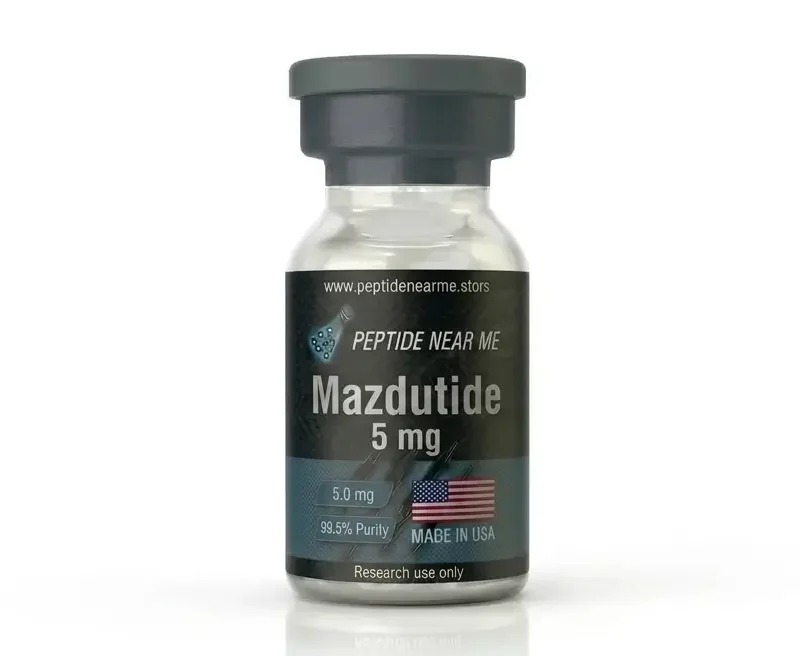
Mazdutide hits the same two receptors as survodutide, GLP-1 and glucagon. Eli Lilly originated it, and Innovent Biologics holds the rights in China. China’s regulator approved it for weight management in June 2025 and for type 2 diabetes later that year, which made it the first dual GLP-1 and glucagon drug approved anywhere.
| Survodutide | Mazdutide | |
|---|---|---|
| Receptors | GLP-1 and glucagon | GLP-1 and glucagon |
| Approved anywhere | No | Yes, China |
| FDA status | Investigational | Not approved |
| Key trial | SYNCHRONIZE | GLORY and DREAMS programs |
| Rights holder | Boehringer Ingelheim | Lilly outside China, Innovent in China |
Because mazdutide already reached the market in one country, it offers real world evidence that the survodutide class does not yet have. Even so, it has no FDA approval, and you cannot lawfully obtain it in the United States.
Survodutide Peptide Benefits: What the Trials Found
The data come from published and press released trial results, and you can read the literature on PubMed and the study listings on ClinicalTrials.gov.
Weight Loss in Adults Without Diabetes
In SYNCHRONIZE-1, 725 adults with overweight or obesity took survodutide at 3.6 mg or 6.0 mg weekly, or a placebo, for 76 weeks. The higher dose produced up to 16.6 percent average weight loss versus 3.2 percent on placebo. About 85 percent of participants on survodutide lost at least 5 percent of their body weight, compared with about 39 percent on placebo. The New England Journal of Medicine published the full results in June 2026.
Weight Loss in Adults With Type 2 Diabetes
SYNCHRONIZE-2 enrolled people with obesity and type 2 diabetes. In results reported on October 1, 2026, survodutide produced up to 13.1 percent weight loss versus 3.1 percent on placebo at 76 weeks, along with improved blood sugar control. People with diabetes usually lose less weight on these drugs, so a smaller number is expected.
Liver Fat and MASH
A phase 3 trial in people with obesity and fatty liver disease, called SYNCHRONIZE-MASLD, reported large reductions in liver fat and visceral fat. The company reported the results in June 2026, and the study appeared in Nature Medicine. The larger LIVERAGE trials will test whether survodutide improves liver scarring, and those results come later.
What Has Not Been Shown Yet
Long term outcomes, including heart events, are still pending, and a cardiovascular outcomes trial called SYNCHRONIZE-CVOT is expected to report later this year. Until then, nobody can claim that survodutide protects the heart or extends life.
Survodutide Dosage: Trial Doses Only
People search for survodutide dosage, survodutide dosing chart, and survodutide peptide dosage, so here is what the evidence supports. No approved dose exists, because the drug has no approval. The numbers below describe the doses used in the phase 3 trial.
| Context | Dose used |
|---|---|
| SYNCHRONIZE-1 trial arms | 3.6 mg or 6.0 mg |
| Frequency | Once weekly, subcutaneous injection |
| Titration | Gradual dose increases under trial supervision |
| Duration | 76 weeks |
| Any other use | No verified dose exists |
Trial doses rose gradually under medical monitoring to limit stomach side effects. That structure cannot be copied safely by someone ordering an untested vial online. For that reason, we publish no self dosing chart for survodutide.
Safety and Side Effects
As with other drugs in this class, trial participants mostly reported digestive side effects such as nausea, vomiting, and diarrhea, especially during dose increases. Check the full New England Journal of Medicine paper for the exact rates, because the figures vary by dose and trial. Long term safety remains under study.
The Gray Market Problem
Vials labeled survodutide circulate online even though no one can legally sell the drug. Boehringer has not released it outside clinical trials, so any seller claims a source the company did not authorize. Buyers cannot verify the contents, the purity, or the sterility. For that reason, we do not sell survodutide, and we advise caution toward any vendor who does.
What You Can Do Right Now
You have three realistic paths.
First, talk to a licensed clinician about approved options. Tirzepatide and semaglutide products already hold FDA approval for weight management, and a doctor can judge which one fits your health history.
Second, look for a clinical trial. Boehringer and other sponsors list studies on ClinicalTrials.gov, and trial participants receive the real drug under medical supervision.
Third, if you work in a laboratory, explore compounds that do have documented supply. Our Weight and Metabolism category includes research materials such as CBL-514 and 5-Amino-1MQ, each sold strictly for research with a lot matched COA. Questions? Contact our team.
Frequently Asked Questions About Survodutide
What is survodutide?
Survodutide is an investigational once weekly injection that activates the GLP-1 and glucagon receptors. Boehringer Ingelheim is developing it for obesity and MASH.
Is survodutide FDA approved?
No. No regulator has approved it. Boehringer expects to file in 2027.
What is the survodutide mechanism of action?
It activates GLP-1 receptors to reduce appetite and glucagon receptors to raise energy expenditure and liver fat burning.
How does survodutide compare with tirzepatide?
Tirzepatide has FDA approval and showed 20.9 percent weight loss at its highest dose over 72 weeks. Survodutide showed up to 16.6 percent over 76 weeks in a different trial.
How does survodutide compare with retatrutide?
Retatrutide adds GIP activation and showed about 24 percent weight loss in a phase 2 trial. Survodutide has reported phase 3 results, while retatrutide’s are pending.
How does survodutide compare with mazdutide?
They target the same two receptors. China has approved mazdutide, while survodutide has no approval anywhere.
What is the survodutide dosage?
No approved dose exists. The phase 3 trial used 3.6 mg or 6.0 mg weekly with gradual titration under medical supervision.
Can I buy survodutide online?
No lawful source exists outside clinical trials. We do not sell it, and we advise against buying unverified vials.
What are the side effects?
Trials mainly reported nausea, vomiting, and diarrhea, as with similar drugs. Read the published trial papers for exact rates.
When might survodutide become available?
Boehringer plans to file for approval in 2027. Approval could arrive in late 2027 or 2028 if the data hold up.
| Format | 10 mg |
|---|
Related products
-
TB-500 For Sale — Buy TB-500 Peptide Online | Best Price, Ships in 48h
Price range: $55.00 through $135.00

Reviews
There are no reviews yet.